Preparing for Great Lakes scuba diving
Great Lakes diving is approachable, but it rewards preparation. Not “buy everything” preparation — competence preparation. Cold water, changing surface conditions, and shipwreck environments make skills and systems matter.
Exposure protection: the foundation
The biggest upgrade most divers make for the Great Lakes is moving into dry suit capability. It’s not about toughness. It’s about staying warm enough to think clearly, hold buoyancy, and handle the dive calmly.
Buoyancy and propulsion that protect the site
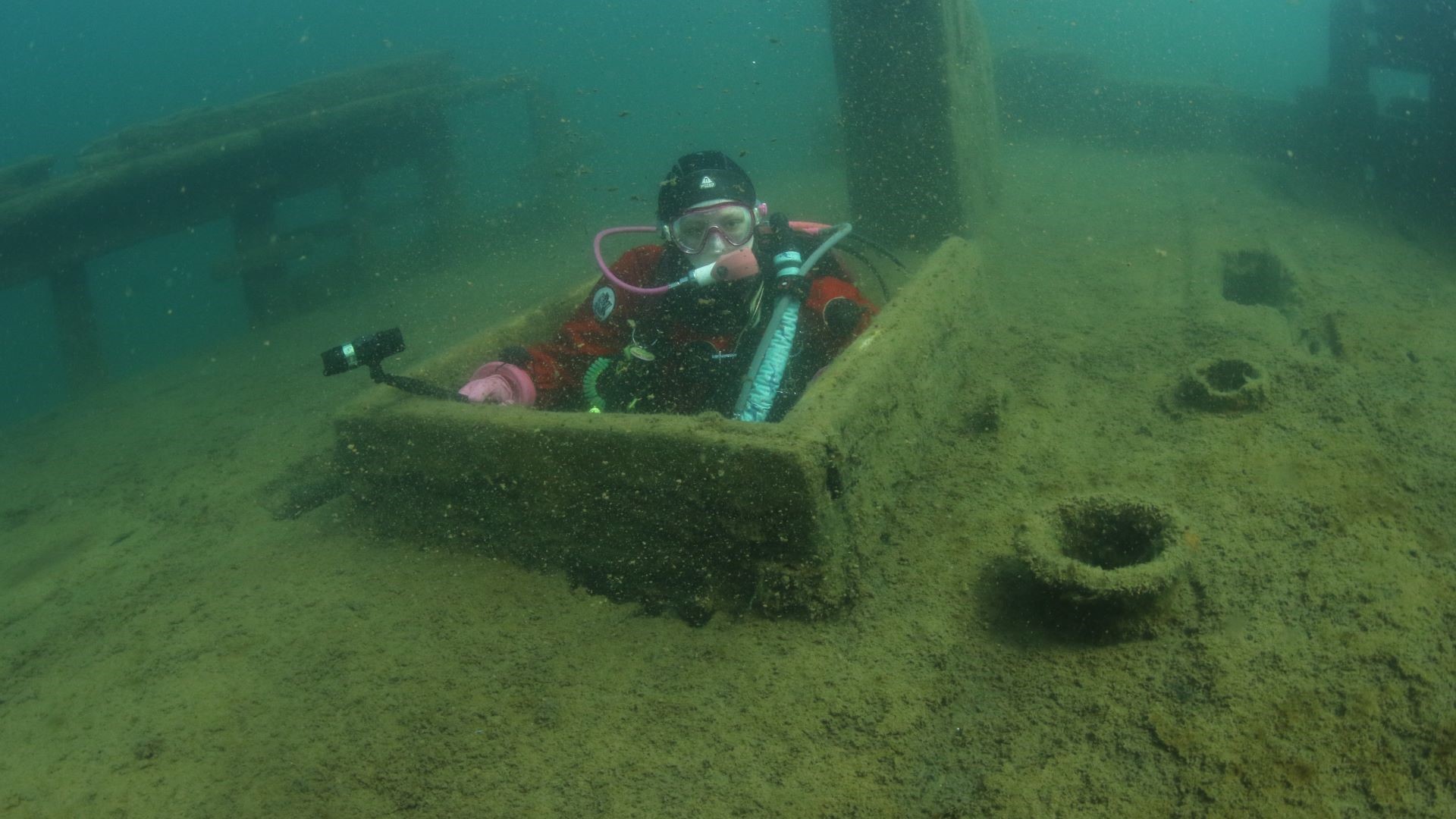
Great Lakes wrecks often sit on silt or fragile structure. If your finning turns the wreck into a cloud, the dive gets smaller fast. Great Lakes divers tend to put serious time into trim, buoyancy, and propulsion.
Navigation and communication
You don’t need to be a technical diver to take navigation seriously. You do need the ability to stay with your buddy/team, manage a light, and keep orientation when visibility isn’t perfect.
Lights, reels, and “simple systems”
- Primary light that’s reliable and easy to operate with gloves
- Backup light if you’re on deeper or overhead-adjacent dives
- Reel/spool use where appropriate (not everywhere, not always)
- Streamlined gear so you’re not fighting clutter in cold water
Boat and weather logistics
The Great Lakes can turn quickly. You plan around wind, waves, and timing. Good operators and good divers are conservative about go/no-go calls. This is part of why Great Lakes diving culture tends to be calm and methodical.
Photos